Neurobehavioral
Nutrition Lab
In the Neurobehavioral Nutrition Lab, we focus on conducting nutrition intervention clinical trials to promote mental health, cognition, cardiometabolic health, and to reduce the severity of disordered eating.
We also have a focus on neurobiology. Why? Because there is a discrepancy between what we know we should do and what we actually do. Why is it, that we know we should eat vegetables every day but perhaps we don’t? Why is it that we may drink copious amounts of alcohol every day even though we know it is not good for us? Dr. Stephanie Caligiuri, the head of the Neurobehavioral Nutrition lab, ponders this every day; a question we strive to answer through our research to enhance the effectiveness of nutrition interventions.
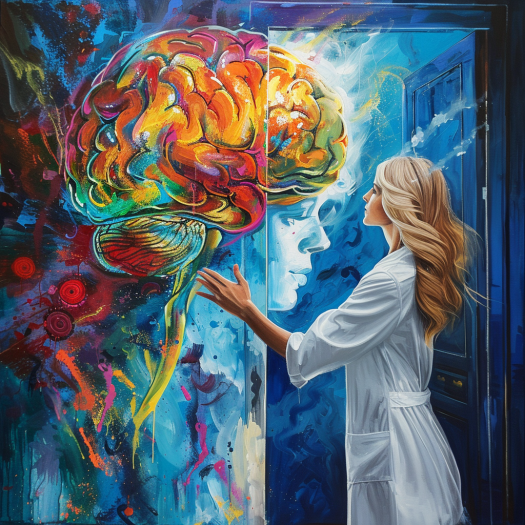
We believe that in order for nutrition interventions to be truly successful, we must consider the individual and the neurobiology behind their behavior. The goal of the lab is to use Behavioral Neuroendocrinology to understand our eating behaviors and to use that to our advantage to promote mental health and cardiometabolic health. We utilize advanced techniques such as functional near-infrared spectroscopy (fNIRS), biosensors, and metabolomics. These methods allow us to assess brain region activity, physiological responses, and metabolic changes in real time under various conditions and dietary interventions.
Studies
Absolute Pitch
Understand how the brain responds to musical perception tasks
- Your Time Commitment: One 90 minute session
- Benefits: Learning more about your music capabilities & brain
- Email: fNIRS@wm.edu for more information
Restorative Practices
Understand how the brain responds to different stress relief practices
- Your Time Commitment: One 90 minute appointment.
- Benefit: Learn more about the latest technologies in neuroscience
- Email: fNIRS@wm.edu for more information
Creatine (Recruitment is Completed)
Will creatine supplementation influence levels of fatigue, brain activity, or mood?
- Your Time Commitment: 4 week trial, 2 visits at 1 hour each
- Benefits: Learn more about your health, the latest technology in Neuroscience, contribute to important research on fatigue and mental health, and obtain full access to your health data collected during the study.
Dance (Recruitment is Completed)
What is going on in the brain of dancers when they display creativity?
- Your Time Commitment: 1 visit (1 hour) of dance exercise.
- Benefits: Learning more about your brain and body during dance
Fun Lab Photos!